
- Research Areas
- Special Projects
- Sponsors and Funding
My research focuses on the development of novel optimization methods and the application of those methods to solve complex decision-making problems primarily in healthcare and sports.
- Inverse Optimization
- Robust Optimization
- Machine Learning
- Radiation Therapy
- Cardiac Arrest & Public Access Defibrillators
- Global Health
- Sports Analytics
- Healthcare Operations
- Sustainability
- Education
| 4. | Accounting for range uncertainties in the optimization of intensity modulated proton therapy Journal Article J. Unkelbach, T. C. Y. Chan, T. Bortfeld In: Physics in Medicine and Biology, vol. 52, pp. 2755-2773, 2007. @article{ChanTCY.J002,Treatment plans optimized for intensity modulated proton therapy (IMPT) may be sensitive to range variations. The dose distribution may deteriorate substantially when the actual range of a pencil beam does not match the assumed range. We present two treatment planning concepts for IMPT which incorporate range uncertainties into the optimization. The first method is a probabilistic approach. The range of a pencil beam is assumed to be a random variable, which makes the delivered dose and the value of the objective function a random variable too. We then propose to optimize the expectation value of the objective function. The second approach is a robust formulation that applies methods developed in the field of robust linear programming. This approach optimizes the worst case dose distribution that may occur, assuming that the ranges of the pencil beams may vary within some interval. Both methods yield treatment plans that are considerably less sensitive to range variations compared to conventional treatment plans optimized without accounting for range uncertainties. In addition, both approaches—although conceptually different—yield very similar results on a qualitative level. |
| 3. | A robust approach to IMRT optimization Journal Article T. C. Y. Chan, T. Bortfeld, J. N. Tsitsiklis In: Physics in Medicine and Biology, vol. 51, pp. 2567-2583, 2006. @article{ChanTCY.J001,Managing uncertainty is a major challenge in radiation therapy treatment planning, including uncertainty induced by intrafraction motion, which is particularly important for tumours in the thorax and abdomen. Common methods to account for motion are to introduce a margin or to convolve the static dose distribution with a motion probability density function. Unlike previous work in this area, our development does not assume that the patient breathes according to a fixed distribution, nor is the patient required to breathe the same way throughout the treatment. Despite this generality, we create a robust optimization framework starting from the convolution method that is robust to fluctuations in breathing motion, yet spares healthy tissue better than a margin solution. We describe how to generate the data for our model using breathing motion data and we test our model on a computer phantom using data from real patients. In our numerical results, the robust solution delivers approximately 38% less dose to the healthy tissue than the margin solution, while providing the same level of protection against breathing uncertainty. |
| 2. | Single and multi-agent exploration of a Markov decision process Proceedings Article T. C. Y. Chan, E. Feron In: Proceedings of the 42nd Allerton Conference on Communication, Control, and Computing, 2004. @inproceedings{ChanTCY.Oth002c,In this paper, we investigate the problem of efficiently visiting every state of a Birth-Death Markov Decision Process (BDP). In the single-agent case, we consider two different BDPs and derive their corresponding optimal policies - one being a pure greedy policy, and the other being a threshold policy based on greedy actions. We then generalize to a multi-agent setting and prove the optimality of a greedy policy in a related problem |
| 1. | Development of an automated tracking system of tagged wild animals Proceedings Article M. Ishutkina, T. Chan, E. Feron In: Proceedings of the Automation Technology for Off-Road Equipment Conference, 2004. @inproceedings{ChanTCY.Oth001c,The objective of this study is to develop a tracking algorithm which would allow a biologist to locate tagged animals using an unmanned aerial vehicle. The algorithm is developed to track the red wolves in a wildlife refuge in North Carolina. The red wolf is an endangered species and there are about a hundred of them living in the wild. For tracking purposes, each animal is outfitted with a collar containing a radio transmitter which emits a signal of a specific frequency over a given range. Using transmitter signal range, we discretize the refuge terrain map and develop a suboptimal greedy algorithm to search for the probabilistic targets striving to minimize the expected traveling time. To reduce the computational complexity, we consider a two-layered approach to the search problem. At the top level, the algorithm chooses the pack sectors as targets and, at the lower level, employs a local policy to travel between the discrete sensing locations. Using the animal behavior model provided by the wildlife biologists, we develop the probability rules to update the predicted target locations given the location of already found wolves. Finally, we present the results of a numerical simulation. |
Redeploy
A software tool to optimize matching of available hospital staff to job requests during COVID-19

A suite of optimization models tailored for the 2017 and 2021 NHL Expansion drafts that allow users to modify objectives and constraints, and evaluate what-if scenarios.

High-performance analytics for sports
An initiative to grow research, student training, industry partnerships, and equity, diversity and inclusion (EDI) in sports analytics.

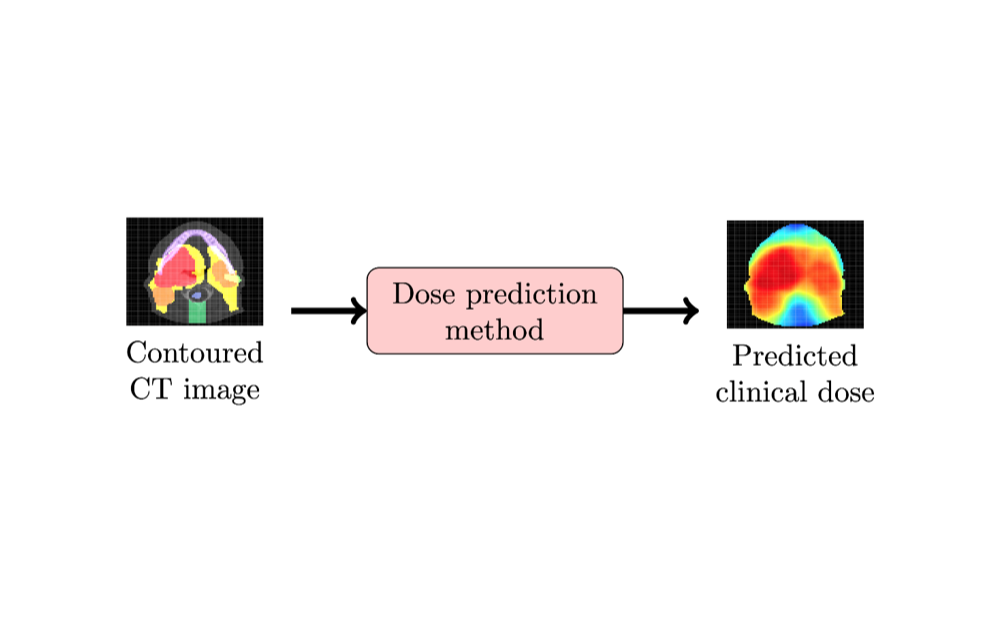
An international competition sponsored by the American Association of Physicists in Medicine to advance dose prediction methods for knowledge-based planning.
Support from the following sponsors is gratefully acknowledged











- Healthcare Operations
- Sports Analytics
- Education
I am interested in a variety of healthcare operations problems including scheduling and process flexibility.
RELEVANT PUBLICATIONS
Sorry, no publications matched your criteria.
I am a passionate sports fan and enjoy analyzing interesting (decision) problems in sports. I have worked on topics in hockey, baseball, tennis, golf, football, and curling. Click here for a video of a talk I gave on sports analytics. Here is my TEDxUofT talk on baseball flexibility. A team of students and I developed an interactive NHL Expansion Draft optimization tool, which allows users to optimize protection and selection decisions in real time.
RELEVANT PUBLICATIONS
Sorry, no publications matched your criteria.
I enjoy developing innovative teaching methods using games and other interactive activities.
RELEVANT PUBLICATIONS
Sorry, no publications matched your criteria.
The goal of inverse optimization is to “reverse engineer” parameters of an optimization model that make a given, observed decision optimal. If it is not possible to make the decision exactly optimal, e.g., the data is noisy or the model is an approximation, then a measure of suboptimality is typically minimized. Viewed through the lens of model fitting, my main interest is to develop new approaches for inverse optimization that optimize and measure data-model fit. Given the increasing amounts of data that are generated as the result of a decision process, I am also interested in finding innovative applications for inverse optimization.
RELEVANT PUBLICATIONS
Sorry, no publications matched your criteria.